Coachella Valley
Bathroom remodeling in the Coachella Valley
A tub that's become a hazard, a dated guest bath, or a primary suite worth doing right: what bathroom projects typically cost, the waterproofing and permit steps you can't see once the tile is up, and how we refer you to our licensed partner contractor.
- Free for homeowners
- Licenses checked at CSLB
- You contract directly with your pro
Quick answer
No one publishes a valley figure, so the nearest benchmark is Los Angeles in Remodeling's 2025 Cost vs. Value report: about $27,100 for a midrange bath remodel, $44,600 for a universal-design (accessible) bath and $85,100 for an upscale one. A tub-to-shower conversion alone often costs far less. A permit is needed everywhere in the valley if you move a drain, replace or move the shower valve, add circuits or vent a new fan.
Who to call: Coachella Valley Remodeling connects you with our licensed partner contractor, who visits and gives you a written price. Free to you. Get a free quote or call (760) 766-2218.
Bathrooms are small rooms with a lot packed into them: plumbing, waterproofing, ventilation, electrical, tile and glass, and most of what matters ends up behind the tile where you'll never see it. In the Coachella Valley, a few more things come into play: very hard water on glass and fixtures, slab floors that make curbless showers a real construction job, condo rules, and a lot of homeowners who want a bathroom they can still use safely in twenty years.
¿Prefiere leer en español? Remodelación de baños en el Valle de Coachella
What kind of bathroom project is yours?
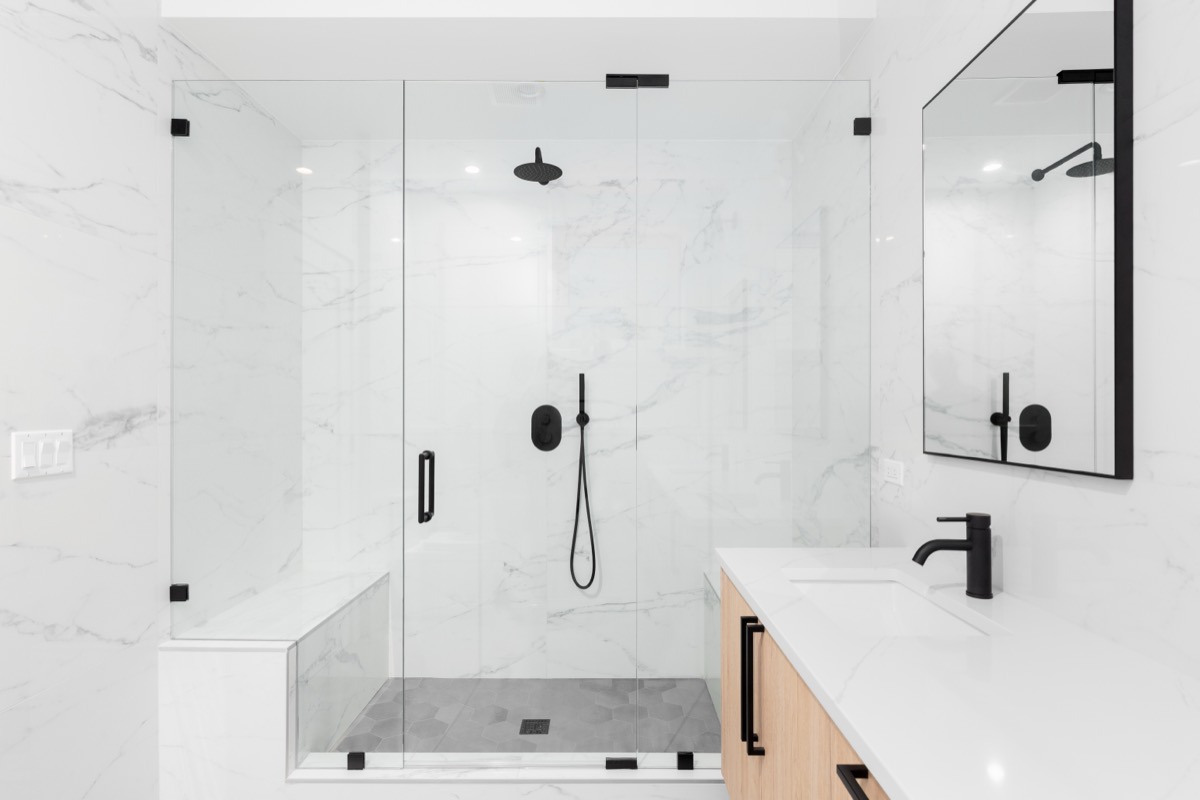
- Tub-to-shower conversion. The tub comes out and a walk-in shower goes in its place. The most-requested bath project for owners planning to age in place.
- Refresh. New vanity and top, toilet, faucet, mirror, lighting and paint. The shower or tub stays. Often no permit.
- Full remodel, same layout. Everything down to the studs and slab, with fixtures in the same places. New shower valve, waterproofing, tile and glass. Permits and inspections.
- Primary suite or layout change. Moving the toilet or shower, enlarging the room, a double vanity, a freestanding tub, a curbless shower. Plans, permits and often HOA review.
Know which one you're asking for, and every bid you get will be easier to compare.
What bathrooms typically cost
There's no Coachella Valley series, so the closest published benchmark is Los Angeles in Remodeling's 2025 Cost vs. Value report:
| Project (Los Angeles, 2025) | Typical job cost |
|---|---|
| Bath remodel, midrange | $27,143 |
| Bath remodel, universal design (accessible) | $44,580 |
| Bath remodel, upscale | $85,055 |
In the same report, the midrange bath recouped about 90% of its cost at resale in Los Angeles. Valley labor generally runs at or somewhat below L.A., while HOA logistics, condo access and summer heat precautions can add cost.
For a tub-to-shower conversion alone, Fixr's guide gives a typical range of about $1,200 to $10,000, averaging around $4,000:
| Shower type | Typical cost (Fixr) |
|---|---|
| Prefab base and wall kit, including tub removal | About $4,000 |
| Solid surface or composite walls | About $2,000–$8,000 |
| Ceramic tile | About $6,000–$12,000 |
| Porcelain tile | About $7,000–$14,000 |
| Natural stone | About $6,000–$20,000 |
These are typical ranges, not quotes. What moves your number: whether the drain or valve moves, the size of the shower, tile choice and pattern, glass (frameless costs more than framed), a niche and bench, grab-bar blocking, and what's found when the old tub comes out.
Value and premium paths
- Value. A rental, a guest bath or a 1990s builder bath: a prefab or simple tiled shower, a stock vanity with a quartz or solid-surface top, new fixtures and lighting. Fast, durable, easy to clean.
- Premium. A primary suite in a club home or a mid-century restoration: custom tile, frameless glass, a curbless shower, heated floors, a freestanding tub, custom vanities. Design-led, with an architect or designer often involved. Start with luxury and custom remodeling, which includes a design consultation.
Both deserve the same things underneath: real waterproofing, a properly sized fan, and a written scope.
What's behind the tile
These are the parts you can't see later, and the parts most worth asking about:
- Waterproofing. Ask what system goes under the tile: a traditional mortar bed with a liner, or a sheet or liquid membrane. Many building departments inspect the shower pan, often with a flood test, before tile goes on. Ask whether yours will be inspected and when.
- Slope and drain. The floor has to slope to the drain everywhere. Linear drains make large-format tile and curbless entries easier.
- Ventilation. A fan that actually vents outside, sized for the room, with a timer or humidity switch.
- Blocking. Solid wood blocking in the walls where grab bars might go someday, even if you don't install them now. It costs little with the walls open and a lot later.
- The valve. A pressure-balanced or thermostatic valve, placed so you can turn on the water without standing in the cold spray.
Desert details
- Hard water on glass and fixtures. Desert Water Agency groundwater, serving most of Palm Springs, averaged 240 mg/L of hardness in its 2025 report, about 14 grains per gallon. CVWD's Cove Communities system, serving Palm Desert, Rancho Mirage, Indian Wells and La Quinta, averaged 120 mg/L (2026 report). Mineral spotting on clear glass is constant. Ask about protective glass coatings, fewer glass panels, a squeegee-friendly design, and a whole-house softener or filtration while the plumbing is open.
- Slab floors. Most valley homes are built on slabs. A curbless shower, or moving a toilet or drain, means cutting the slab. That's normal permitted work, but it adds cost, dust and time.
- Older homes and fixtures. For single-family homes built before 1994, California law makes replacing noncompliant plumbing fixtures with water-conserving ones a condition of final permit approval on alterations (Civil Code 1101.4). Your contractor should plan for it.
- Termites. UC IPM calls desert subterranean termites the most destructive subterranean species in the Sonoran Desert of southeastern California (Pest Note 7415). Wet framing around an old tub is a favorite spot. A good scope says how hidden damage is priced before demolition.
- Summer work. Thinset, grout and adhesives have temperature limits. In a closed-up house the AC needs to run during the work.
Aging in place
Many valley homeowners remodel a bathroom for the long run. Features worth pricing:
- a walk-in shower with a low threshold or curbless entry
- grab bars, or at least blocking for them
- a built-in or fold-down bench and a hand shower on a slide bar
- a comfort-height toilet
- slip-resistant floor tile
- lever handles and good lighting, including a night light
- a wider door if a walker or wheelchair may be needed
The Cost vs. Value figure for a universal-design bath, $44,580 in Los Angeles, gives a sense of a full accessible remodel. A simple tub-to-shower conversion with grab bars costs far less.
What goes wrong, and what our partner contractor agrees to
Bathroom jobs fail the same way other remodels do: vague bids, change orders that appear once the old tub is out, no-shows, a contractor who goes quiet, and work hidden behind tile that can't be checked later. We built our partner standard from about 1,600 public complaints about remodeling and repair work, and our partner agreement requires it:
-
Licensed, bonded and insured, checked by us
Before any introduction we look up our partner contractor's license at cslb.ca.gov: active, the right classification for your job, bond current, workers' comp on file or a valid exemption, plus a certificate of liability insurance. We check again before every new introduction.
-
Your information goes only to our partner contractor, with your OK
One licensed local partner contractor, named before it contacts you, and only if you approve. Never a call center or a list, and "stop" means stop.
-
A small deposit, then pay as work gets done
California caps the down payment at 10% of the price or $1,000, whichever is less, and payments can't run ahead of the work. Our partner agreement requires it too: no pay-in-full, no cash-only.
-
A written, itemized scope
Our partner agreement requires every task, the materials by name, what's excluded, who pulls permits, allowances for anything not chosen yet, and start and finish dates, before money changes hands.
-
No surprise charges
Every change is written, priced and signed by you before the work happens. Our partner agreement says the contractor won't charge for a change you didn't sign.
-
Measure, draw, approve, then cut
Cabinet layouts and countertop templates, seams and cutouts approved by you before anything is ordered or cut.
-
Show up, or call ahead
Our partner agreement requires appointments confirmed the day before, 24 hours' notice of changes and calls returned within one business day. We track no-shows.
-
One local person who answers, plus photo updates
A named contact at the contractor and one at our office. Owners who are away get photos at the end of every work day.
-
Your home protected and left clean
Our partner agreement requires floor and counter protection, dust control, stone cut outside or with dust extraction, debris hauled away, broom-clean every day.
-
Walkthrough first, written warranty after
Final payment only after a walkthrough and a finished punch list, and our partner agreement requires at least a one-year written workmanship warranty. If there's a dispute, we step in to mediate.
For bathrooms in particular, ask your contractor to photograph the waterproofing, blocking and valve before the tile goes on, so you have a record of what's behind the walls. California caps the down payment at 10% or $1,000, whichever is less, and payments can't run ahead of the work (B&P 7159.5).
Choosing a bathroom contractor
- License. Look it up at cslb.ca.gov. A full bathroom remodel with plumbing, electrical and tile is usually done by a B general building contractor. Tile-only work fits a C-54 (Ceramic and Mosaic Tile) license; plumbing work, a C-36.
- Insurance. Liability insurance and workers' comp if they have employees. Your HOA will want the certificate.
- Waterproofing system named in the bid, and who's responsible if the shower leaks.
- Itemized scope. Demo, haul-away, framing repairs, plumbing, electrical, fan, waterproofing, tile by name, glass, vanity, top, fixtures, paint, permits, and allowances for anything not chosen yet.
- Liner and bath-system franchises. Acrylic liners and prefab systems are fast and can be a good value. Compare them to a tiled shower on the same scope, and get the warranty terms in writing.
- No pressure. Estimates should stay valid for at least seven days. California gives you three business days to cancel a home improvement contract signed at home, five if you're 65 or older.
We check the license, bond, insurance and workers' comp before every introduction. See how it works.
Permits and HOAs
Permits. Moving a drain, replacing or moving the shower valve, adding circuits or venting a new fan is permitted work everywhere in the valley. The nine incorporated cities (Palm Springs, Desert Hot Springs, Cathedral City, Rancho Mirage, Palm Desert, Indian Wells, La Quinta, Indio and Coachella) run their own building departments; unincorporated communities such as Thousand Palms, Bermuda Dunes and Thermal go through Riverside County. Your contract should say who pulls the permit. If someone tells you a shower rebuild with a new valve doesn't need one, get a second opinion.
HOAs. Even for interior work, many associations require contractors on the gate list with insurance on file, set work hours, and regulate dumpsters and parking. In condos, plumbing in shared walls and hard flooring over another unit often need association approval. If your CC&Rs require approval, California Civil Code section 4765 says the association must decide in writing and explain any denial.
Timeline
- Site visit and scope. Measure, choose the shower type, fixtures and tile.
- Order long-lead items. Vanity, fixtures and glass. Glass is measured after tile.
- Permit and HOA approval, if needed.
- Demo and rough-in. Framing repairs, plumbing and electrical, inspection.
- Waterproofing and pan inspection.
- Tile, vanity, top and fixtures.
- Glass, final inspection, walkthrough and punch list.
A prefab conversion can take days; a full tiled remodel usually takes several weeks. If your home has only one bathroom, ask how the contractor will keep a toilet working. Seasonal owners can plan in spring and build in summer, with photo updates at each stage. See second-home services.
Bathrooms by city
Permit offices, HOAs, water and housing stock vary across the valley. Pick your city, or see all areas:
Common questions
How much does a bathroom remodel cost in the Coachella Valley?
No one publishes a valley figure, so the nearest benchmark is Los Angeles in Remodeling's 2025 Cost vs. Value report: about $27,100 for a midrange bath remodel, $44,600 for a universal-design (accessible) bath and $85,100 for an upscale one. A tub-to-shower conversion alone often costs far less. Written, itemized bids after a site visit are the real number.
How much does a tub-to-shower conversion cost?
Fixr's guide puts most conversions between about $1,200 and $10,000, averaging around $4,000, with high-end custom tile and glass reaching about $20,000. A prefab shower base and walls sits near the low end; a custom tiled shower with frameless glass sits near the top.
Do I need a permit to remodel a bathroom?
If you move a drain, replace or move the shower valve, add circuits or vent a new fan, yes, everywhere in the valley. Like-for-like vanity, toilet or tile replacement without changing plumbing or electrical often doesn't, but each city sets its own rules and your contractor should confirm.
Can I have a curbless shower on a slab floor?
Often, but it usually means cutting and recessing the slab so the floor slopes to the drain, which is permitted plumbing work and adds cost. Ask contractors to price a curbless design and a low-threshold design side by side.
Do I need HOA approval to remodel a bathroom?
Only if your CC&Rs require it, but many valley associations regulate contractor access, work hours and dumpsters even for interior work, and condos often need sign-off for plumbing in shared walls or hard flooring over another unit.
How long does a bathroom remodel take?
A tub-to-shower conversion with a prefab system can take days; a full tiled remodel with permits and inspections usually takes several weeks, longer if fixtures or glass are backordered. Order fixtures and glass early, and get a written schedule with inspection points.
How much can a contractor ask for up front?
Under California law, a home improvement down payment can't exceed 10% of the price or $1,000, whichever is lower. After that, payments can't run ahead of the work done.
Are you the contractor?
No. We're a free referral service. We check our partner contractor's license and insurance, introduce them only with your OK, and stay in touch while the job runs. You sign with, and pay, the contractor directly.
Last reviewed . Prices and rules change; confirm details with your contractor and your city or county building department.