Decision guide
Aging-in-place kitchen and bath remodeling
The changes that make a kitchen and bathroom safer and easier to use for decades, what they typically cost, which ones to do while the walls are open, and how to hire without pressure.
- Free for homeowners
- Licenses checked at CSLB
- You contract directly with your pro
Quick answer
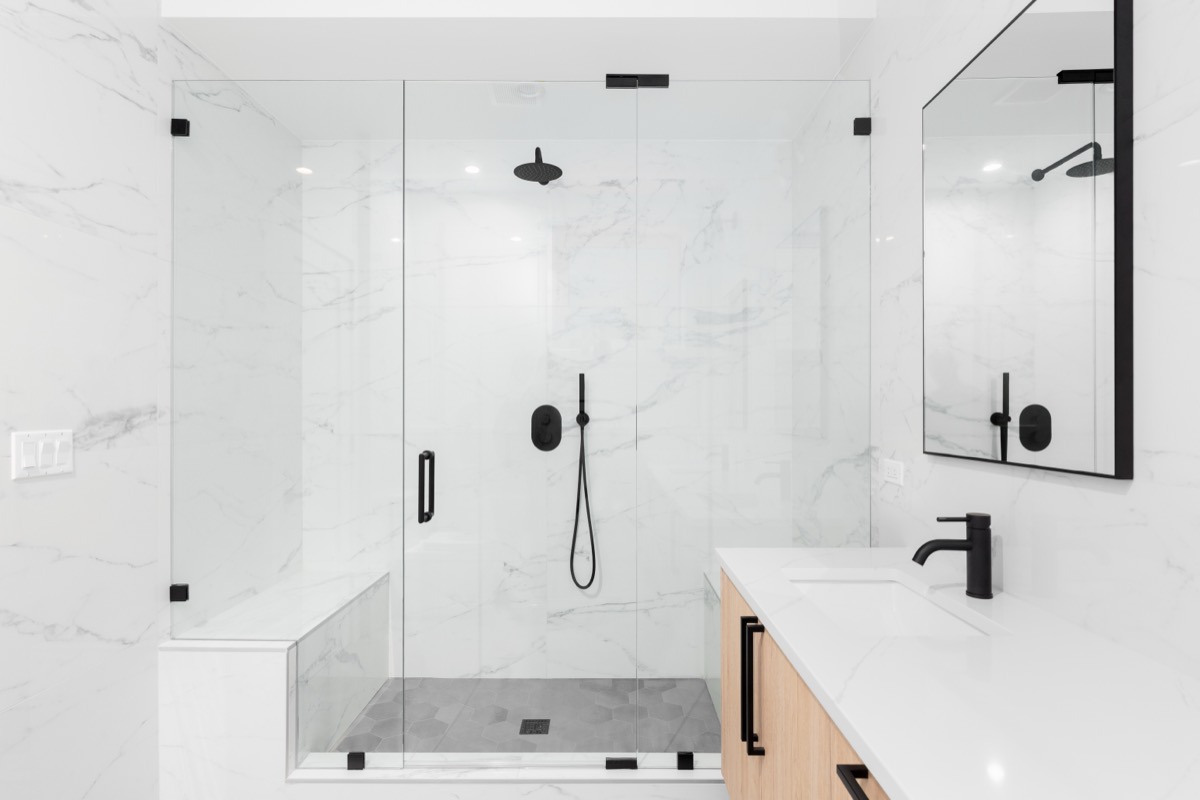
For most people the change that matters most is the shower: a low-threshold or curbless shower with grab bars, a bench and a handheld shower head. Remodeling's 2025 Cost vs. Value report puts a universal-design bath remodel in Los Angeles, the nearest published metro, at about $44,580, against $27,143 for a standard midrange bath. In the kitchen, drawers instead of base-cabinet shelves and better lighting make the biggest everyday difference.
Who to call: Coachella Valley Remodeling connects you with our licensed partner contractor, who visits and gives you a written price. Free to you. Get a free quote or call (760) 766-2218.
Most people want to stay in the home they have. In AARP's 2021 Home and Community Preferences Survey, 77% of adults 50 and older said they want to remain in their homes for the long term. In the Coachella Valley that's a lot of people: Census estimates put the median age at 66 in Rancho Mirage and 68 in Indian Wells, and in the high 50s in Palm Springs and Palm Desert (Census ACS 2020–2024).
The good news is that most valley homes are single-story, which removes the hardest problem. The kitchen and bathroom are where the useful work is. This guide covers what to change, what it typically costs, and how to hire without pressure.
Why the bathroom comes first
About one in four adults 65 and older reports falling each year, according to the CDC. Bathrooms combine hard surfaces, water and stepping over things, so they're where most aging-in-place budgets go first.
The changes that matter most:
- Low-threshold or curbless shower in place of a tub or a shower with a tall curb. A linear drain lets the floor slope one way so water stays in.
- Grab bars at the shower entry, inside the shower and beside the toilet, anchored into solid blocking. The ADA standards for public buildings mount them 33 to 36 inches above the floor, a useful reference for homes (2010 ADA Standards).
- Blocking everywhere. While the walls are open, add wood blocking in every shower and toilet wall, even where you don't want bars yet. It costs very little now and saves opening tile later.
- A shower bench or a fold-down seat, plus a handheld shower on a slide bar you can reach sitting down.
- Slip-resistant floor tile. Ask for tile rated for wet interior floors. Smaller tiles with more grout lines also give more grip.
- Comfort-height toilet. The ADA reference for public restrooms is a seat 17 to 19 inches high.
- Lever handles on faucets and doors, which are easier with arthritis than knobs.
- Wider door. The ADA reference is 32 inches of clear opening. Offset hinges can gain a couple of inches without reframing.
- Lighting: a lit path from the bedroom to the bath and bright, even light at the vanity.
Kitchen changes that help every day
Kitchens are less about falls and more about reach, strength and eyesight.
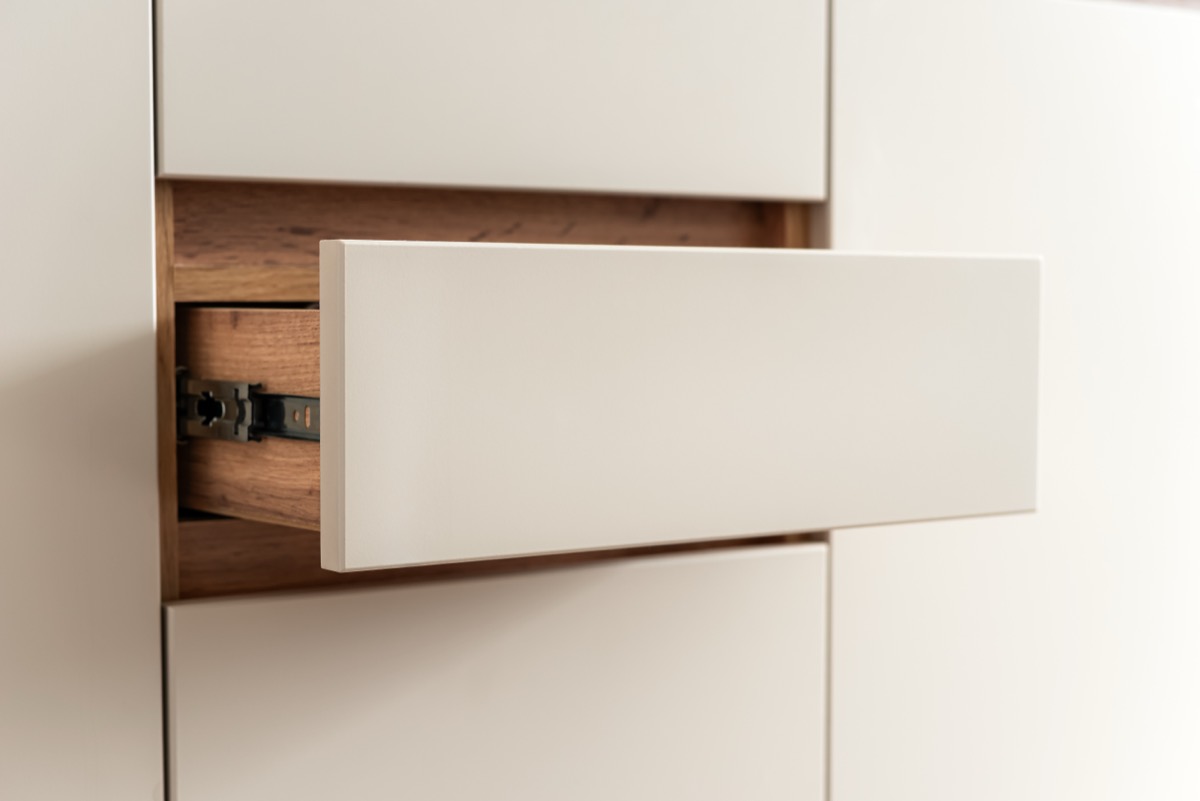
- Drawers instead of base-cabinet shelves. No kneeling to dig in the back of a cabinet. If you're keeping your cabinets, pull-out shelves are a good retrofit.
- Pull-down or lower storage for uppers, or simply move everyday dishes to drawers and use uppers for rarely used things.
- A lower work section around 30 to 34 inches high with knee space below, for working seated.
- Wall oven at counter height, or a side-opening oven, so you're not lifting heavy dishes from a low door.
- Induction cooktop. No open flame, and the surface around the pan stays cooler than gas or radiant electric. It may need a new circuit; Southern California Edison serves the west and central valley and Imperial Irrigation District serves La Quinta, Indio, Indian Wells and Coachella, so ask your utility about rebates.
- Single-lever, pull-down faucet with a long reach.
- D-shaped pulls rather than small knobs.
- Under-cabinet lighting and contrast between counters and cabinets so edges are easy to see.
- A microwave drawer or counter-height microwave instead of one above the range.
What it typically costs
There's no Coachella Valley series. Los Angeles is the closest metro with published figures, from Remodeling's 2025 Cost vs. Value report:
| Project (Los Angeles, 2025) | Typical job cost | Cost recouped at resale |
|---|---|---|
| Bath remodel, midrange | $27,143 | 89.6% |
| Bath remodel, universal design | $44,580 | 57.2% |
| Minor kitchen remodel, midrange | $29,765 | 126.9% |
| Bath remodel, upscale | $85,055 | 42.3% |
The universal-design bath in that report includes features such as a curbless shower, grab bars and wider access. Smaller changes, done as handyman or single-trade jobs, can cost far less:
| Change | Scale of job |
|---|---|
| Grab bars into existing blocking or studs | Small job, often a handyman visit if no permit is needed |
| Handheld shower on a slide bar | Small plumbing job |
| Pull-out shelves in existing base cabinets | Small to medium job |
| Lever handles, D-pulls, lighting upgrades | Small jobs, easy to bundle |
| Tub-to-shower conversion | Bathroom remodel scope, usually permitted |
| Curbless shower with linear drain | Full bathroom remodel, permitted |
Under California law, anyone doing a job worth more than $1,000 in labor and materials, or work that needs a permit, must be a licensed contractor. Bundled small jobs can cross that line quickly. See handyman vs. licensed contractor.
Kitchen & cabinet cost estimator
Typical installed range Estimate
$69,000 – $103,500
Anchored to kitchen remodeling costs from Remodeling Cost vs. Value 2025, Los Angeles. Size and finish adjustments are our rough rules of thumb, not a quote. Only a contractor's written, itemized bid after a site visit is a real price.
A California property tax exclusion worth knowing
California Revenue and Taxation Code section 74.3 lets construction that adapts a home for a severely and permanently disabled resident be excluded from reassessment. The State Board of Equalization reads it as covering changes that make existing features more usable, such as an accessible shower or wider doors, not added space the home didn't have before. Unrelated work in the same remodel is still assessable.
You file a claim with the county assessor, normally with a physician's statement. Ask the Riverside County Assessor for the current form and filing window before the work is finished.
Do it in the right order
If you can only do part of it now, plan the whole thing and build in the parts that are cheap now and expensive later:
- While walls are open: blocking for grab bars, wiring for lighting, a wider door frame.
- While floors are up: a curbless shower pan, a level threshold, slip-resistant tile.
- While cabinets are being ordered: drawers instead of shelves, a lower work section, wall oven placement.
- Later, in an afternoon: grab bars, handles, a shower seat.
Hiring safely
Older homeowners are the people most often targeted by bad contractors. In the public complaints we reviewed, seniors most often reported lost deposits, pressure to sign and unfinished work signed off as complete. Some rules that protect you:
- No same-day signing. A fair contractor will leave a written proposal and wait.
- Down payment cap. California limits it to 10% of the price or $1,000, whichever is less.
- Five business days to cancel a home improvement contract signed at home if you're 65 or older (three days otherwise).
- Check the license at cslb.ca.gov. A bathroom remodel usually calls for a B (general building) license; plumbing work for a C-36 plumbing license.
- Ask about training. Some contractors and designers hold aging-in-place credentials such as the NAHB's Certified Aging-in-Place Specialist. It's not required, but it's a fair question.
- Bring someone. Invite a family member or friend to meetings and copy them on the scope and schedule.
- Don't sign a completion form until the work is actually done and you've checked it, ideally with someone else.
What goes wrong, and what we require
Our partner contractor agrees to these in writing, and a family member can be copied on everything:
-
One person who answers
“Nobody calls back, and everyone blames someone else.” · 34% of kitchen complaints
Our standard: One local contractor is responsible for the whole job, and one person at our office answers if they don't.
Every project gets a named contact at the contractor and at our office, plus a shared project thread. Our partner agreement requires replies within one business day and written responsibility for subcontractors. We check in at the estimate, start, midpoint, completion and 30 days.
-
Walkthrough before final payment
“It looks worse than what we tore out.” · 32% of kitchen complaints
Our standard: You don't make the final payment until you've walked the job with the contractor and the punch list is done.
We check our partner contractor's license classification for the trade before every introduction. At the end, you and the contractor walk the job with a written punch list, and the last payment waits until it's finished. Workmanship complaints go on the contractor's record with us.
-
Kitchen stays usable until materials arrive
“Five months washing dishes in the bathtub.” · 29% of kitchen complaints
Our standard: Your old kitchen stays in place until the new cabinets and stone are on site and checked, unless you choose otherwise.
Your written scope includes an estimated completion date and the order of trades. Our partner agreement requires that demo waits until the cabinets, slab and appliances have been delivered and inspected. You get photo updates every work day, and payments follow milestones.
-
Warranty in writing
“The lifetime warranty disappeared when the company did.” · 23% of kitchen complaints
Our standard: Our partner agreement requires at least a one-year workmanship warranty in writing, and we keep a copy.
Our partner agreement requires a written workmanship warranty of at least one year, separate from the manufacturer's, with claims acknowledged within two business days and a visit scheduled within ten. We check the contractor's CSLB record and bond and keep your documents on file.
-
You get exactly what you approved
“They sold me solid wood and delivered particleboard.” · 22% of kitchen complaints
Our standard: Your contract names the exact cabinet construction, finish and stone, so you get what you approved.
The itemized scope lists the cabinet line, box material, door construction, finish, hardware and slab. Our partner agreement requires deliveries to be inspected and photographed before anything is installed. For natural stone, you see and approve the actual slab.
-
Approve drawings before anything is cut
“The island came out four inches too narrow.” · 15% of kitchen complaints
Our standard: Nothing is ordered or cut until you've approved the drawings and the seam layout.
Our partner agreement requires on-site measurements, your appliance spec sheets, cabinet drawings and a countertop layout showing seams, overhangs and sink and cooktop centerlines. You sign off before anything is ordered or cut.
-
Small deposit, pay as you go
“We paid in full, and then they disappeared.” · 13% of kitchen complaints
Our standard: Our partner contractor never asks for more than 10% or $1,000 down, as California law requires. You pay as work is completed.
California caps home-improvement down payments at 10% or $1,000, whichever is less, and payments can't run ahead of completed work. Our partner agreement repeats that rule, and we review the payment schedule before you sign. We verify the license and bond at cslb.ca.gov first.
-
They show up, or they call
“They cancelled the install the morning of, again.” · 12% of kitchen complaints
Our standard: Our partner agreement requires every appointment to be confirmed the day before, and we track every missed one.
Our partner agreement requires day-before confirmations and at least 24 hours' notice of changes except in real emergencies. We log no-shows, and repeated no-shows end the partnership.
From about 1,600 public complaints (BBB, Yelp, CSLB) about kitchen and cabinet work that we read in 2026. How we counted
Valley-specific details
- Hard water. Desert Water Agency groundwater averaged about 14 grains per gallon of hardness in its 2025 report. Handheld showers and thermostatic valves scale up; choose fixtures with easy-to-clean nozzles and replaceable cartridges.
- Scald protection. Anti-scald or thermostatic shower valves are a simple safety upgrade, especially if anyone in the home has reduced sensation in their hands or feet.
- HOAs. If you're in a club or 55+ community, interior work usually doesn't need approval, but your contractor will still need to be on the gate list with insurance on file. Check your rules.
- Seasonal timing. If you leave for the summer, that's a natural window for a bathroom remodel, with photo updates while you're away.
If you're helping a parent, we can include you on every update. We refer you to our licensed, insured partner contractor, and you decide whether to hire them.
Common questions
What's the most important aging-in-place change?
For most people it's the shower. Replacing a tub or a stepped shower with a low-threshold or curbless shower, plus grab bars, a bench and a handheld shower head, addresses the room where many falls happen. In the kitchen, the biggest everyday difference usually comes from drawers instead of base-cabinet shelves and better lighting.
How much does an aging-in-place bathroom cost?
Remodeling magazine's 2025 Cost vs. Value report puts a universal-design bath remodel in Los Angeles, the nearest published metro, at about $44,580, compared with $27,143 for a standard midrange bath. Smaller changes, like grab bars with proper blocking or a handheld shower, cost far less. Get an itemized bid after a site visit.
Will an accessibility remodel raise my property taxes?
It might not. California Revenue and Taxation Code section 74.3 lets a qualifying severely and permanently disabled resident exclude improvements made to adapt the home for accessibility from reassessment. You file a claim with the county assessor, usually with a physician's statement. Ask the Riverside County Assessor for the current form and deadlines.
Do grab bars need special installation?
Yes. A grab bar must be anchored into solid blocking or framing, not just drywall or tile. If you're remodeling, have your contractor add wood blocking in the shower and toilet walls even where you don't want bars yet. That way they can be added later in an afternoon.
What height should kitchen counters be for aging in place?
Standard counters are about 36 inches. Many aging-in-place kitchens add a section at a lower height, around 30 to 34 inches, for seated work, with open knee space below. The ADA standards for public buildings cap accessible work surfaces at 34 inches, a useful reference, though they don't govern private homes.
How do I avoid being pressured or overcharged?
Never sign on the first visit, don't pay more than California's legal down payment limit (10% or $1,000, whichever is less), and remember that if you're 65 or older you have five business days to cancel a home improvement contract signed at home. Invite a family member to meetings and copy them on the written scope.
Last reviewed . Prices and rules change; confirm details with your contractor and your city or county building department.