Indio, CA · Electrical
Indio electrical work and electricians
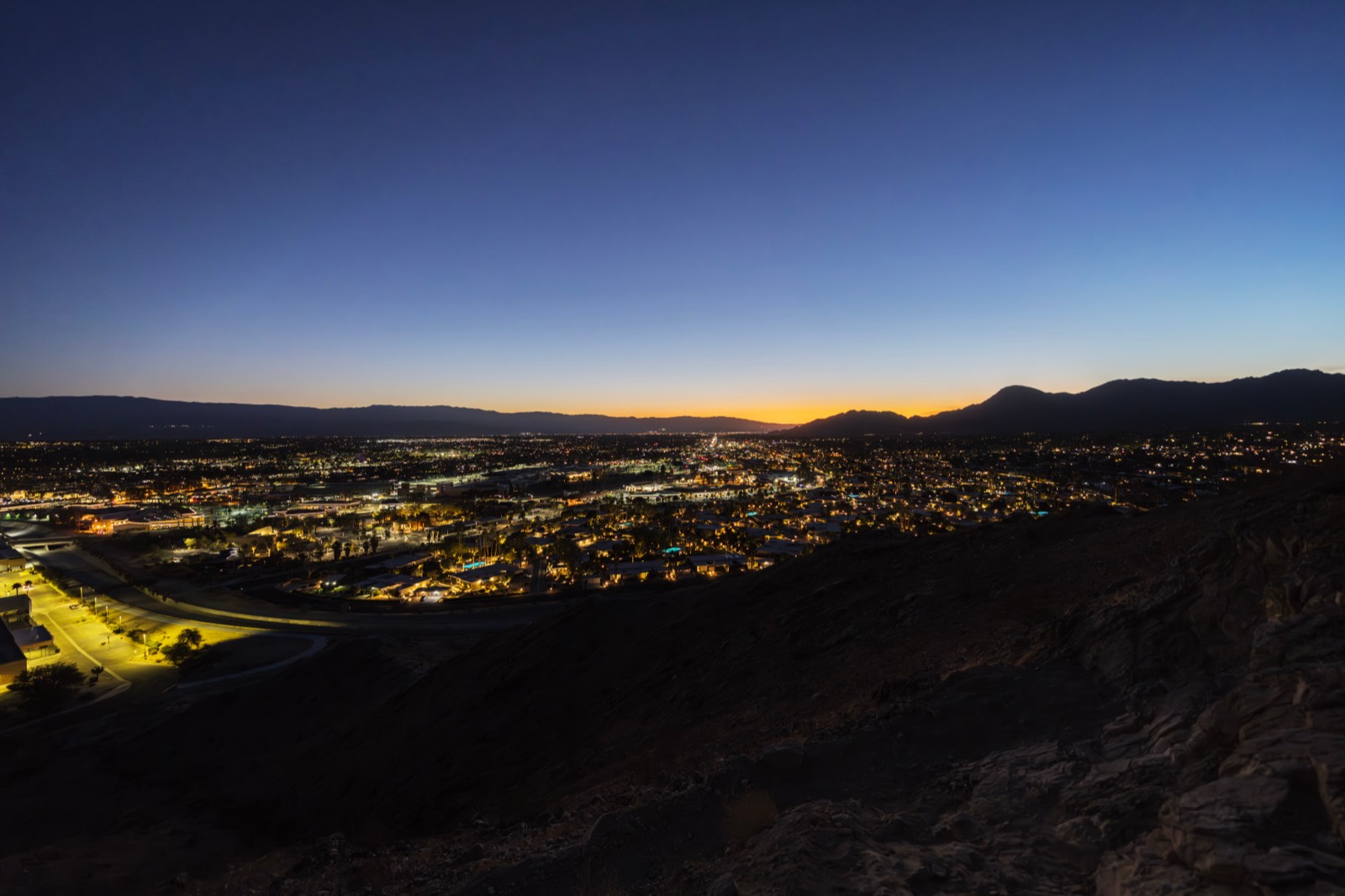
Indio is the valley's biggest city, and half its homes were built after 2000. Most electrical calls are about adding chargers, circuits and backup power; the older homes near downtown need a different conversation.
- Free for homeowners
- Licenses checked at CSLB
- You contract directly with your pro
Quick answer
Qmerit puts most Level 2 EV charger installations at about $800 to $2,500 before the charger, and Fixr's national figures (January 2025) put panel upgrades at $1,500 to $4,500 for most jobs. Indio is on IID, which has been listed as offering a charger rebate of up to $500. Permits go through City of Indio Building & Safety; Sun City Shadow Hills and Terra Lago have their own architectural rules.
Who to call: Coachella Valley Remodeling connects you with our licensed C-10 electrical / C-7 low-voltage partner contractor, who visits and gives you a written price. Free to you. Tell us about your project or call (760) 766-2218.
Searches for “electrician indio ca” come from a city that doubled in size in a generation. Half of Indio's homes are from 2000 or later, in master-planned communities like Sun City Shadow Hills, Terra Lago, Indian Palms and Heritage Palms, while the 1940s–60s homes near downtown carry the wiring of their era (Census ACS 2020–2024).
Newer communities: chargers and capacity
Most 2000s homes have a 200 A service and a garage close to the panel. That makes a Level 2 charger one of the most straightforward jobs in the valley. The questions are usually how much capacity is left once you add an induction range or a heat pump, and whether a load-management device is cheaper than a bigger panel.
In 55+ communities like Sun City Shadow Hills, owners also ask for golf-cart outlets, better lighting for aging eyes, and backup power for medical equipment and the fridge.
Older Indio: test before you quote
Near downtown, expect smaller services, ungrounded outlets and additions made without permits. A careful contractor tests circuits and checks the panel before giving a price, and tells you plainly what's a hazard and what's just dated.
Typical costs
- Panel upgrade, most jobs: $1,500 to $4,500; about $3,000 for 100 A to 200 A (Fixr, January 2025).
- Level 2 charger installation: about $800 to $2,500, plus a charger of roughly $400 to $800 (Qmerit).
- Permits: $50 to a few hundred dollars.
The value path here is simple: a clear written price, the permit included, a firm date, and no surprise “upgrade” pitch on the day.
IID and the city
- Imperial Irrigation District supplies Indio. IID has been listed as offering up to $500 toward a Level 2 home charger (third-party listing); check current terms with IID before buying hardware. IID also issues conservation alerts in heat waves.
- City of Indio Building & Safety issues permits for every new circuit, panel change, charger, generator and battery.
- Master-planned communities have their own architectural rules for anything outside.
Summer outages
IID generally avoids planned summer maintenance, but unplanned outages still happen in the heat. In August 2026 an outage in nearby Thermal hit several school sites in triple-digit temperatures (NBC Palm Springs). A small battery on the router and cameras, and a transfer switch for a generator, are common, affordable steps. Our generator vs. battery guide compares the options.
Questions to ask an Indio electrician
- Can my current panel take a charger, or would load management avoid an upgrade?
- Is the permit in your price, and who schedules the inspection?
- Will the charger or outdoor box be rated for summer heat and sun?
- In a 55+ community, how will you handle gate access and quiet hours?
- What's your warranty on labor, and how quickly do you come back if a breaker trips again?
Keep the deposit to 10% of the price or $1,000, whichever is less.
Value and comfort upgrades that pay off
Not every electrical job is about capacity. Motion-sensor lights on the driveway and side yard, a ceiling fan in each bedroom so the AC thermostat can sit a few degrees higher, and a whole-home surge protector at the panel are small permitted jobs that many Indio owners bundle into one visit.
What we ask of the electrical contractor
-
Permit pulled, inspection passed, before the final payment
“The panel went in without a permit, and it surfaced when we sold the house.”
Our standard: Panel, circuit, EV charger, generator and battery work is permitted, and you get the signed-off inspection before the final payment.
We ask the electrical partner to name the permit and its fee in the written price, schedule the city or county inspection, and send you the inspection result. A bid that leaves the permit out is a red flag, not a discount.
-
Utility work spelled out in the price
“The panel price doubled once the utility said the meter and service had to change.”
Our standard: The written price says what happens on the utility side (SCE or IID), what's included and what could change it, before you sign.
Service upgrades often need the utility to disconnect, approve or upgrade the service drop or meter. The written price should say who files with SCE or IID, what the lead time is, and what an unexpected utility requirement would cost.
-
A C-10 contractor and certified electricians for line-voltage work
“The low-voltage guy ran a new 240-volt circuit for the charger.”
Our standard: Anything at 120 or 240 volts goes to a C-10 electrical contractor whose electricians hold state certification; low-voltage AV, Wi-Fi and data wiring to a C-7 or C-10 licensee.
California requires a C-10 license for line-voltage work and DIR certification for the electricians a C-10 contractor employs. A C-7 low-voltage license covers systems at 91 volts or less. We check both on the CSLB site before any referral.
-
A handover you can actually use
“Six remotes, three apps, and nobody returns calls when the music stops.”
Our standard: At the end you get a walk-through, labelled equipment, a written sheet of the Wi-Fi, logins and accounts in your name, and support terms in writing.
We ask the partner for an itemized equipment list with model numbers, the passwords and admin accounts set up in the owner's name, and what a service call costs after the warranty period, all before the final payment.
-
No lock-in you didn't agree to
“Only the original dealer can change a scene, and they went out of business.”
Our standard: The written price names the platform (open or dealer-programmed) and whether you get the programming files or a dealer-transfer path.
Dealer-programmed systems such as Control4, Crestron and Savant are excellent, but changes usually need a dealer. Ask who owns the programming, and get it in writing. App-based systems are cheaper to change later; the written proposal should say which you're buying.
-
Clean walls and a mount rated for the TV
“Wires hanging down the wall, and the TV sagged off a drywall anchor.”
Our standard: The price says how cables are hidden, what the mount is rated for, how it attaches, and whether drywall patch and paint are included.
Desert homes often have block, stucco or post-and-beam walls, and many TV walls sit over a fireplace. Ask how the mount attaches to your wall, whether power is moved behind the TV as a code-compliant outlet, and who patches the wall.
-
Systems that come back after an outage
“The cameras went dark in July and nobody noticed until October.”
Our standard: For seasonal homes, remote alerts are set up and tested, the router and hub sit on battery backup, and the plan says who resets what when you're away.
Summer outages happen here in triple-digit heat. Ask for alerts for power loss, temperature and water leaks, a small UPS on the router and hub, and a written plan for a reset visit.
-
No pressure sales on batteries, generators or solar
“They said the battery was basically free and I had to sign that night.”
Our standard: No same-night signing. Incentives are stated as programs you apply for, with no promise that you'll get them.
CSLB warns that solar and storage draw more complaints than any other trade it oversees, often from high-pressure sales and 'free' claims. You get a written price, time to think, and the cancellation period the law gives you.
Who does the work
We don't do electrical work ourselves; we're a free referral service. An Indio job goes to our licensed C-10 electrical partner contractor, the CSLB classification for panels, circuits, chargers and generator hookups. The electricians it sends must carry state certification (DIR program). Look up the license at cslb.ca.gov, and read C-10 vs. C-7: who can do what.
Nearby cities
Common questions
How much does an electrician charge in Indio?
No Indio-specific data exists. Nationally, most panel upgrades run $1,500 to $4,500 (Fixr) and a charger installation about $800 to $2,500 before the charger (Qmerit). Smaller jobs, like a ceiling fan on an existing box, usually carry a minimum charge. Ask for the price in writing.
Do I need HOA approval in Sun City Shadow Hills?
For exterior work, usually yes: generators, battery cabinets, exterior lights and visible conduit. Interior circuits generally just need the permit and the community's contractor-access rules.
Can I put a charger outside in Indio's heat?
Yes, if the charger is rated for outdoor use and high temperatures. Shade helps, and so does mounting it on the north side of the house. Check the manufacturer's temperature rating.
Who checks that the work was done right?
The City of Indio's building inspector, once the permit is pulled. Hold your final payment until the inspection passes.
Last reviewed . Prices and rules change; confirm details with your contractor and your city or county building department.