La Quinta, CA · Home theater
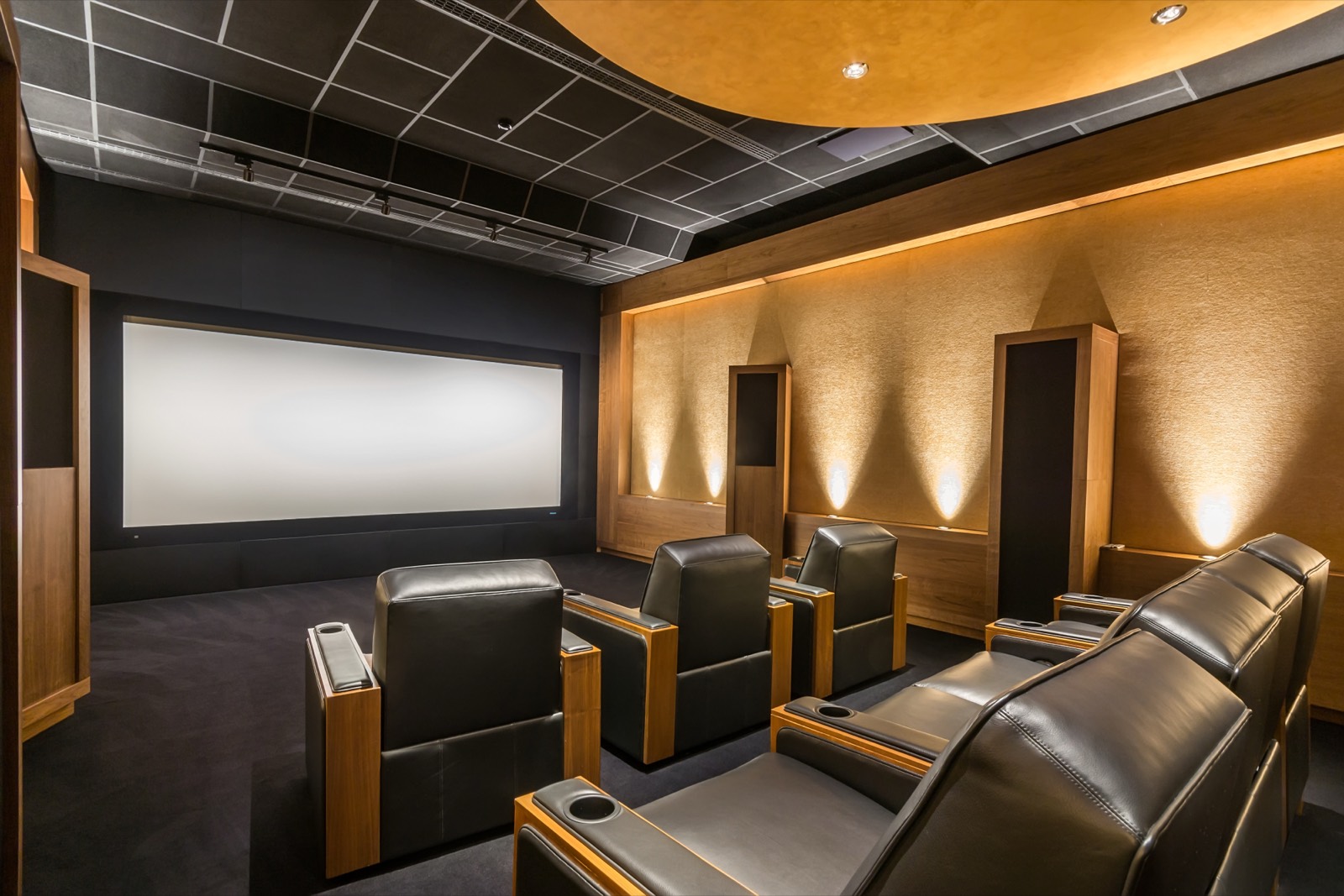
Home theater and media rooms in La Quinta
PGA West and La Quinta Country Club condos, Griffin Ranch and Rancho La Quinta estates, Trilogy, and the older homes of the Cove. What a TV wall or theater typically costs here, and the HOA and permit steps to plan for.
- Free for homeowners
- Licenses checked at CSLB
- You contract directly with your pro
Quick answer
Fixr's national figures (January 2025) start around $1,000 for a TV, sound and concealed wiring, with most dedicated rooms at $10,000 to $50,000. TV mounting labor alone runs about $100 to $800. Most La Quinta homes outside the Cove are in HOAs, so get association approval before permits go to the city.
Who to call: Coachella Valley Remodeling connects you with our licensed C-10 electrical / C-7 low-voltage partner contractor, who visits and gives you a written price. Free to you. Tell us about your project or call (760) 766-2218.
La Quinta grew from about 4,200 residents in 1980 to more than 37,000 in 2020, so roughly half its homes date from 2000 or later. That's good news for home theater: most homes have drywall, attics and family rooms designed around a TV. The complications come from associations, the season and, in the Cove, older homes that were never wired for any of it.
Where you live changes the job
PGA West and the club condos. 1980s and 1990s attached homes. Noise through shared walls is the main constraint, and many owners are seasonal. A TV wall with a soundbar or on-wall speakers, plus remote support, is the common request.
Griffin Ranch, Rancho La Quinta and the estates. Bigger rooms, bigger budgets, and often a dedicated theater or a great room with architectural speakers and lighting scenes.
Trilogy and 2000s tracts. Straightforward builds: in-wall wiring through the attic, a 5.1 system and a clean equipment location.
The Cove. Small 1930s-to-1980s homes on the grid below the mountains, usually with no HOA. Expect older wiring, fewer outlets and more electrical work before the AV part starts.
Typical costs
National figures from Fixr's home theater guide, updated January 2025:
| Project | Typical range |
|---|---|
| TV mount, labor | about $100–$800 (Fixr) |
| TV wall with hidden wiring | about $1,000–$2,500 for wiring |
| Surround sound equipment | about $350–$6,200 |
| Dedicated room | about $10,000–$50,000 |
Not a quote; the written proposal sets the price.
The HOA-first sequence
Most La Quinta homes outside the Cove are in an HOA, and the city expects association approval before permits. For a theater:
- Ask the association whether interior AV work needs notice and what exterior items (patio TVs, speakers, conduit) need approval.
- Put the contractor on the gate list and send its insurance certificate.
- Then the contractor files any permit with the city.
Read the HOA approval guide for timelines.
Licenses
AV, network and control wiring at 91 volts or less is C-7 low-voltage work; outlets, circuits and lighting are C-10 electrical work by state-certified electricians. We refer La Quinta projects to our licensed C-7 low-voltage / C-10 electrical partner contractor. You hire and pay it directly.
Desert notes
La Quinta is on Imperial Irrigation District power. Summer outages and heat are the two things to design around: keep receivers and amplifiers in a ventilated spot, add a battery backup to the router and streaming gear, and use outdoor-rated equipment on patios. If you leave for the summer, schedule the install for May or September so you can see it working before you go, or ask for a video walk-through.
What we ask of the contractor
-
Permit pulled, inspection passed, before the final payment
“The panel went in without a permit, and it surfaced when we sold the house.”
Our standard: Panel, circuit, EV charger, generator and battery work is permitted, and you get the signed-off inspection before the final payment.
We ask the electrical partner to name the permit and its fee in the written price, schedule the city or county inspection, and send you the inspection result. A bid that leaves the permit out is a red flag, not a discount.
-
Utility work spelled out in the price
“The panel price doubled once the utility said the meter and service had to change.”
Our standard: The written price says what happens on the utility side (SCE or IID), what's included and what could change it, before you sign.
Service upgrades often need the utility to disconnect, approve or upgrade the service drop or meter. The written price should say who files with SCE or IID, what the lead time is, and what an unexpected utility requirement would cost.
-
A C-10 contractor and certified electricians for line-voltage work
“The low-voltage guy ran a new 240-volt circuit for the charger.”
Our standard: Anything at 120 or 240 volts goes to a C-10 electrical contractor whose electricians hold state certification; low-voltage AV, Wi-Fi and data wiring to a C-7 or C-10 licensee.
California requires a C-10 license for line-voltage work and DIR certification for the electricians a C-10 contractor employs. A C-7 low-voltage license covers systems at 91 volts or less. We check both on the CSLB site before any referral.
-
A handover you can actually use
“Six remotes, three apps, and nobody returns calls when the music stops.”
Our standard: At the end you get a walk-through, labelled equipment, a written sheet of the Wi-Fi, logins and accounts in your name, and support terms in writing.
We ask the partner for an itemized equipment list with model numbers, the passwords and admin accounts set up in the owner's name, and what a service call costs after the warranty period, all before the final payment.
-
No lock-in you didn't agree to
“Only the original dealer can change a scene, and they went out of business.”
Our standard: The written price names the platform (open or dealer-programmed) and whether you get the programming files or a dealer-transfer path.
Dealer-programmed systems such as Control4, Crestron and Savant are excellent, but changes usually need a dealer. Ask who owns the programming, and get it in writing. App-based systems are cheaper to change later; the written proposal should say which you're buying.
-
Clean walls and a mount rated for the TV
“Wires hanging down the wall, and the TV sagged off a drywall anchor.”
Our standard: The price says how cables are hidden, what the mount is rated for, how it attaches, and whether drywall patch and paint are included.
Desert homes often have block, stucco or post-and-beam walls, and many TV walls sit over a fireplace. Ask how the mount attaches to your wall, whether power is moved behind the TV as a code-compliant outlet, and who patches the wall.
-
Systems that come back after an outage
“The cameras went dark in July and nobody noticed until October.”
Our standard: For seasonal homes, remote alerts are set up and tested, the router and hub sit on battery backup, and the plan says who resets what when you're away.
Summer outages happen here in triple-digit heat. Ask for alerts for power loss, temperature and water leaks, a small UPS on the router and hub, and a written plan for a reset visit.
-
No pressure sales on batteries, generators or solar
“They said the battery was basically free and I had to sign that night.”
Our standard: No same-night signing. Incentives are stated as programs you apply for, with no promise that you'll get them.
CSLB warns that solar and storage draw more complaints than any other trade it oversees, often from high-pressure sales and 'free' claims. You get a written price, time to think, and the cancellation period the law gives you.
Before the final payment
Ask the contractor to show you each source working (streaming, cable or antenna, games), the sound balanced at your seat, the remote or app set up on your phone, and the Wi-Fi and accounts in your name. In a seasonal home, also ask for the support terms in writing.
Nearby cities
Common questions
What hours can AV contractors work in La Quinta?
The city allows construction from 7 a.m. to 5:30 p.m. on weekdays from October through April, 6 a.m. to 7 p.m. from May through September, and 8 a.m. to 5 p.m. on Saturdays, with no work on Sundays or holidays. Your HOA can be stricter.
Can I add a patio TV in an HOA community?
Usually, with approval if it's visible from outside. Ask your association before buying. Then get an outdoor-rated TV for your sun exposure and a GFCI-protected weatherproof outlet installed by a licensed electrician.
How much does a media room cost?
Fixr's national figures put a surround system at $350 to $6,200, concealed wiring at about $1,000 to $2,500 installed, and a fully dedicated room at $10,000 to $50,000. A media room that also serves as a family room usually sits between those.
Who pulls permits in La Quinta?
Your licensed contractor, through the City of La Quinta Design & Development / Building. Low-voltage speaker and video wiring often needs none; new circuits and outlets do.
Last reviewed . Prices and rules change; confirm details with your contractor and your city or county building department.